
Plenary Speakers (To Date)
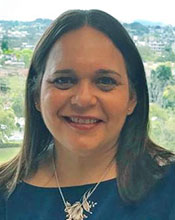 Maritza Barreto-Orta
Graduate School of Planning, University of Puerto Rico, Río Piedras Campus
When the Shoreline Moves: From Science to Integrated Coastal Planning
Dr. Maritza Barreto-Orta is a geological oceanographer and licensed professional geologist whose research focuses on coastal erosion, coastal change, and the integration of coastal science into planning and policy, with additional work in coastal remote sensing, coastal risk, climate change, and citizen science. She is a professor at the Graduate School of Planning at the University of Puerto Rico, Río Piedras Campus, and holds a degree in Geography and graduate degrees in Marine Sciences (Geological Oceanography) from the University of Puerto Rico, Mayagüez Campus. Her work applies coastal science to evidence-based planning, decision-making, and resilience strategies for coastal communities, with support from agencies including NASA, USGS, FEMA, NSF, and NOAA.
Dr. Barreto is the founder and director of the Coastal Research and Planning Institute of Puerto Rico (CoRePI), a member of the Latin American Beach Network, and a board member of the American Shore and Beach Preservation Association (ASBPA). In 2019, she was nominated by the Governor and confirmed by the Puerto Rico Legislature to the Government's Climate Change Expert and Advisory Committee (CEACC), serving until 2024, and she co-authored Chapter 23: US Caribbean in the Fifth National Climate Assessment (2023).
Her honors include the Efraín Pérez Chanis "Friend of Planning" Award (2016) from the Puerto Rico Planning Society and the honorary title of Distinguished Professor from the University of Puerto Rico, Río Piedras Campus (2023). Through her research, teaching, and leadership, Dr. Barreto works to bridge science and practice, making coastal data accessible to communities and decision-makers to strengthen coastal planning and resilience in Puerto Rico and the Caribbean.
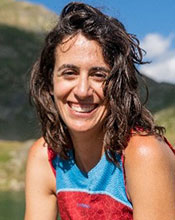 Núria Catalán
Center for Advanced Studies of Blanes—Spanish Research Council (CEAB-CSIC)
Topic: How an Ecofeminist Perspective Helps Us to Study the Anthropogenic Perturbations of the Inland Waters' C Cycle
Dr. Núria Catalán's research focuses on the study of carbon cycling in inland waters. She applies contrasting approaches to the study of organic carbon reactivity, from its molecular composition to its degradation kinetics and from micro to cross-system scales, including understanding its role on ecosystem metabolism and greenhouse gas emissions. Currently, she is a scientific researcher at CEAB-CSIC in Blanes, Girona, studying the impact of climate change on the biogeochemistry of ecosystems especially affected by those impacts. She is one of the founders of the Gender and Science AIL group, working on assessing gender biases and making women in limnology and ecofeminism visible since 2014. Their work was recognized with the prize "Inclusion and Diversity in Academia" in 2021 by the AEET (Spain).
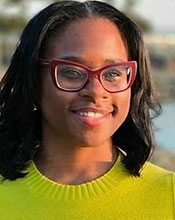 Jeanette Davis (Dr. Ocean)
Department of Marine & Environmental Science, Hampton University
Topic: Making the Hidden Visible: eDNA and the Relationships that Connect Ocean Science and Society
Dr. Jeanette Davis, also known as Dr. Ocean, is a marine microbiologist, ocean policy professional and 2X bestselling author whose books were created to explore and diversify science for young readers. She has served for nearly a decade at the National Oceanic and Atmospheric Administration (NOAA) using genetic tools to manage ocean resources, is a founding member of the NOAA Omics Program, and worked with members of Congress on ocean policy. She is currently an Assistant Professor in the Marine & Environmental Science Department at Hampton University (HU) where she uses eDNA and other molecular tools to reveal the hidden relationships that shape marine ecosystems. Her research ranges from biodiversity associated with oyster reef restoration to microbial symbioses of marine organisms, with the goal of translating those discoveries into stronger conservation and management decisions. Her notable accomplishments include contributing to the discovery of a marine bacterium that fights cancer, research published in Science; being selected as one of 15 women leaders profiled in a dedicated book Climate Champions: 15 Women Fighting for Your Future, part of the “Women of Power” series; and serving as an ocean science consultant for the Academy Award-winning film Black Panther: Wakanda Forever.
Dr. Davis earned her Ph.D. in Marine Microbiology from the University of Maryland Center for Environmental Science – Institute of Marine and Environmental Technology, and a B.S. in Marine & Environmental Science from Hampton University. She is proud to be back at HU, her “Home by the Sea.”
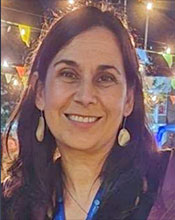 Mariana Meerhoff
Department of Ecology and Environmental Management, CURE, Universidad de la República, Uruguay
Topic: Ecological and Societal Barriers to Sustainability: A Viewpoint from Shallow Lakes and Ponds
Dr. Mariana Meerhoff is a full professor in the Department of Ecology and Environmental Management, CURE-Universidad de la República, Uruguay, and is also associated with the Department of Ecoscience of Aarhus University as an honorary associate researcher.
Her research, education, and outreach interests include climate warming and land-use change effects on the structure and functioning, including greenhouse gas fluxes, of fresh waters; resistance and resilience mechanisms of freshwater ecosystems; and interaction between science, policy making, and environmental management. The methodological approaches include comparative field studies and experiments at different spatial-temporal scales. Her work has been recognized with the L'Oréal-UNESCO Award for Women in Science, the International Recognition of Professional Excellence in Limnology, and the national award for applied research in Uruguay.
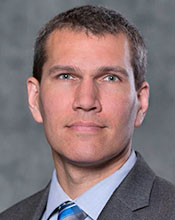 Kevin C. Rose
Rensselaer Polytechnic Institute
Topic: Aquatic Deoxygenation in Freshwater and Marine Ecosystems: Causes and Consequences
Dr. Kevin Rose is a professor at Rensselaer Polytechnic Institute in New York, USA. His research spans ecology and biogeochemistry and focuses predominantly on understanding broad-scale patterns and processes at the ecosystem and regional to global scale. His work often focuses on freshwater ecosystems such as lakes and ponds, because they represent archetypal sites to develop and test ecological theory and provide critical services to society. A goal of his lab group is to forecast the future state of aquatic ecosystems in a regional to global context, with an emphasis on understanding how freshwater ecosystems are changing in response to factors such as land use and climate change. His interdisciplinary research draws on diverse skills in biology, ecology, biogeochemistry, advanced environmental sensors, and computational modeling. His research findings have been published in high-impact journals such as Science and Nature and featured in media outlets such as NPR, the Washington Post, Fox News, and Popular Science magazine.